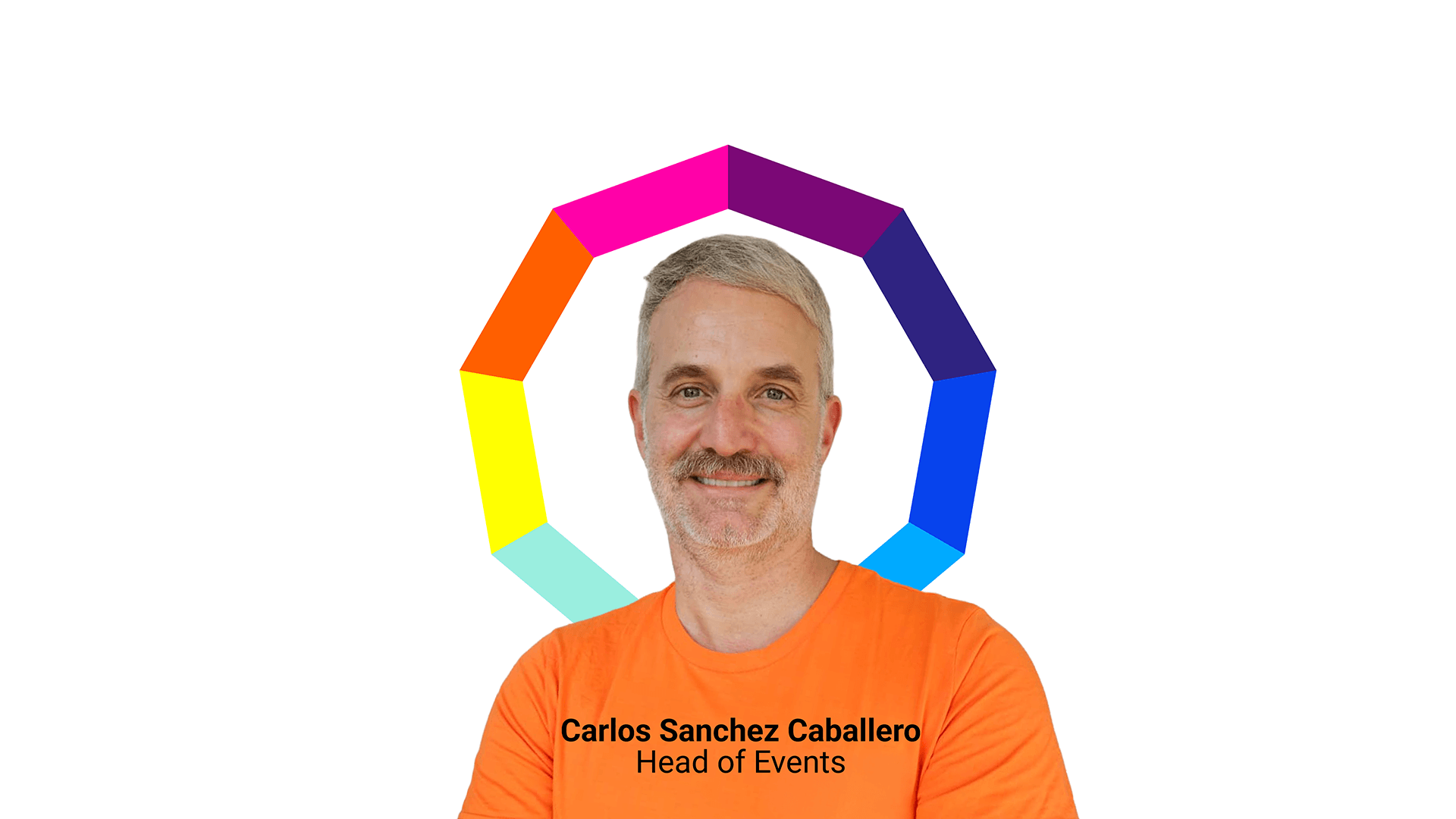
For most people, Pride arrives in June. For me, it has never left. It doesn't pack itself away on the first of July, waiting until next summer to return. It stays with me through every month, shaping how I show up long after the parades have ended.
And because of that, Pride has never felt like just a date in the calendar. It's closer to an orientation, or, to put it better, a way of moving through the world. I always think that that sounds simple written down, though it rarely is in the moment.
My work takes me across Europe and into Japan, planning and producing events that bring people together. Over time, I've come to see how much the meaning of Pride, and the freedom to express it, varies depending on where you are in the world.
In some places, showing up is easy; in others, it carries real risk, and that contrast has stayed with me. It has also made me aware of a responsibility that comes with being based in Europe. Through the events we create and the culture we build around them, we can show that inclusion is a practice, not just a policy.
Of course, I recognize that Pride is growing globally. Each year it becomes more visible, in more countries, with more people willing to be seen and to speak up. But it also means the work isn't finished. Defending rights, whether they relate to sexual orientation, race, religion, gender, or any other aspect of identity, requires continued attention, not just in June, but throughout the year.
As Head of Events at Volue, I spend a lot of time thinking about what it means to bring people together in a way that creates lasting impact. An event is far more than a schedule and a venue. Done well, it tells people we thought about them and wanted them there; it tells them that they belong in the room.
That intention shapes every decision: who is on stage, how spaces are arranged, whether the agenda leaves room for the kinds of conversations that don't always happen in a formal setting. Over the years I have learned that inclusion in an event is rarely obvious. You see it in the details: whether someone walks in and feels at ease straight away or spends the first hour quietly working out whether they fit.
A large part of my life outside work involves the same instinct, applied differently: fundraising for LGBTQ+ causes, for cancer research, for organizations working with communities that don't always have a seat at the table. What I've learned from that work reinforces what I see: community doesn't appear on its own. Someone has to build it.
Inclusion, for me, extends well beyond sexual orientation. It includes anyone who has ever had to translate themselves, their background, their identity, or their way of thinking, before they could be understood. Defending difference, refusing to look away when someone is excluded: none of that is a side concern. It's central to the kind of culture I want to help build, in every event I run and every room I fill.
Someone recently asked me to sum up what Pride means to me in a single word. I said: life.
I meant it literally. Without pride, without the capacity to stand in who you are and refuse to be diminished, it is very difficult to truly live. I don't mean just getting by. I mean really living, feeling open and connected, confident enough to give everything you've got.
That is what I want for the people around me, at Volue and beyond. I want more than the absence of discrimination. I want people to feel that who they are isn't something to manage or hide, but something worth celebrating.
Each and every day.